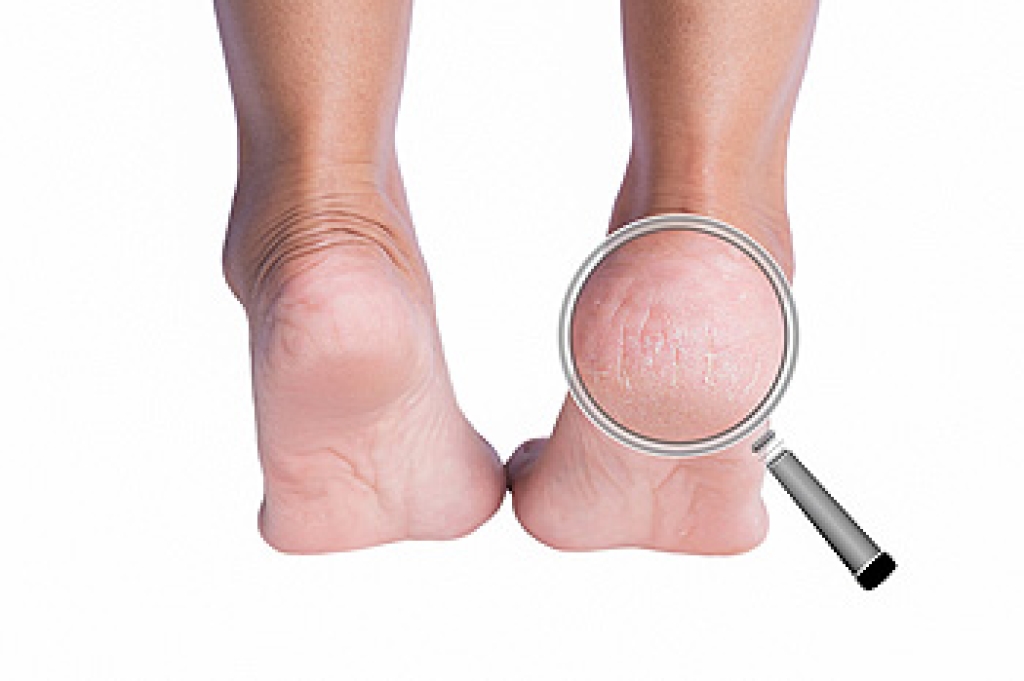
Cracked heels develop when the skin around the heel becomes dry, thick, and less flexible. Extra pressure on this skin can cause it to split, creating cracks that are also called heel fissures. Small cracks can cause mild discomfort, while deeper cracks can become painful or bleed. Symptoms include dry skin, thickened areas, and visible splits around the heel. Standing for long periods of time can place additional pressure on the heel. Wearing open-backed shoes can also contribute because they allow the heel to spread outward. Cold, dry weather and certain skin conditions can make the problem worse.
Several health conditions can contribute to dry, cracked heels. Athlete's foot can cause dry or irritated skin, while other conditions can affect the skin's ability to hold moisture. A podiatrist can examine the heels to determine the severity of the cracks and look for signs of infection. The examination can also help identify pressure patterns or another foot problem that contributes to cracking. Redness, warmth, or drainage can signal an infection and require prompt attention. Patients with diabetes should have cracked heels professionally evaluated because breaks in the skin can increase the risk of serious foot complications.
Podiatric treatment for cracked heels focuses on restoring healthier skin and protecting areas that have split. A podiatrist can carefully remove thick, hardened skin through a procedure called debridement. Treatment can also include prescription-strength creams, protective dressings, or medical skin glue for certain cracks. Shoe inserts can redistribute pressure across the heel and reduce stress on damaged skin. A podiatrist can determine which treatment is appropriate based on the depth of the cracks and the patient's overall foot health. Professional treatment is especially important when cracks are painful, bleeding, or showing signs of infection. Addressing the cause can help protect the skin and improve comfort while standing or walking. If you have racked heels, it is suggested that you schedule an appointment with a podiatrist for effective relief and treatment solutions, which may include prescribed medication.
If the skin on your feet starts to crack, you may want to see a podiatrist to find treatment. If you have any concerns, contact the podiatrists from Oexeman Foot and Ankle, PLLC. our doctors can provide the care you need to keep you pain-free and on your feet.
Cracked Heels
It is important to moisturize your cracked heels in order to prevent pain, bleeding, and infection. The reason cracked heels form is because the skin on the foot is too dry to support the immense pressure placed on them. When the foot expands, the dry skin on the foot begins to split.
Ways to Help Heal Them
- Invest in a good foot cream
- Try Using Petroleum Jelly
- Ease up on Soaps
- Drink Plenty of Water
Ways to Prevent Cracked Heels
- Moisturize After Showering
- Skip a Shower
- Keep Shower Water Lukewarm
- Don’t Scrub Your Feet
If you are unsure how to proceed in treating cracked heels, seek guidance from a podiatrist. Your doctor will help you with any questions or information you may need.
If you have any questions, please feel free to contact our office located in Chicago, IL . We offer the newest diagnostic and treatment technologies for all your foot care needs.

